[Database] Entity-Relationship(ER) Model
🎞 Database Design Process
1. 요구사항 수집 및 분석
2. Conceptual Design
3. Logical Design(or Data model mapping
4. Physical Design
💁♀️ Entity-Relationship(ER) model
데이터를 Entity, Relationship, Attribute 로 표현
-
Entity
ER model의 기본 컨셉으로, 구체적인 객체를 의미한다.
-
Entity Type : 비슷한 속성을 가진 entity의 타입 (schema 같은 느낌)
ex) EMPLOYEE, COMPANYWeak Entity Type
자기 자신을 위한 key attribute를 갖지 않는 entity type으로 항상 total participation을 맺음
( ER diagram에서 네모 두 개로 표현 )- partial key : weak entity를 식별할 수 있는 attribute로, owner entity type의 key와 합쳐서 표현되어야 함. (점선 밑줄로 표현)
-
Entity Set : 특정한 순간에 데이터베이스에 있는 특정 entity type의 entity 집합 (state 같은 느낌)
ex) EMPLOYEE: e1, e2, …
-
-
Attribute
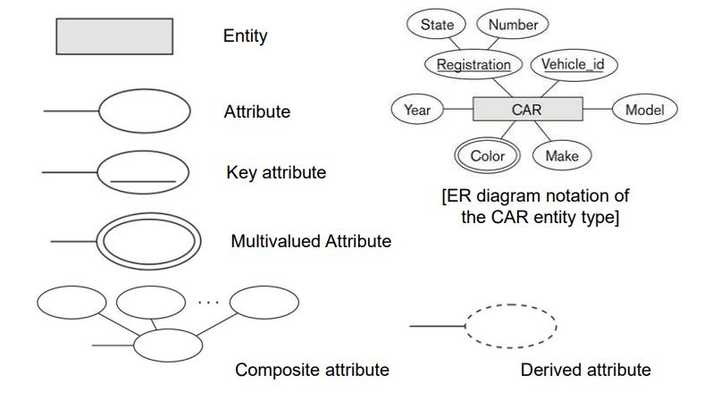
entity를 설명하는 특성으로, entity는 각각 attribute마다 특정한 값을 가진다.
각각의 attribute는 value set(or data type)을 가진다.- Stored attribute
: 값이 직접 저장된 attribute - Derived attribute
: 저장된 값으로부터 파생되는 attribute - Complex attribute
: composite attribute와 multi-valued attribute의 중첩 - Key attribute
: 각 entity가 고유한 값을 가지고, 고유하게 식별될 수 있는 특성 (하나 이상 가질 수 있음) - Value Sets (Domains) of Attribute
: attribute마다 값들이 가져야 되는 domain
ex) 날짜의 경우에는 MM-DD-YYYY 같은 경우가 domain
- Stored attribute
-
Relationship
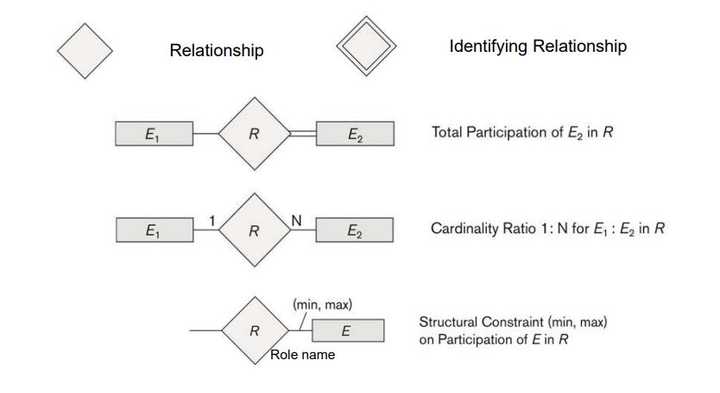
둘 이상의 구별되는 entity들을 특정한 의미로 연관시키는 것-
Relationship type R (관계 유형) : entity들이 어떻게 연관되어 있는지에 대한 유형
ex) WORKS_ON, WORKS_FORDegree of relationship type
: relationship에 참여하고 있는 entity type의 수
ex) Unary (1) (for self), Binary (2) (involving two), Tertiary (about three), … -
Relationship set R (관계 집합) : relationship instance들의 집합
-
🚧 Structural Constraints on Binary Relationship Types
-
Cardinality ratio
entity가 참여하는 relationship instance들의 최대 수 지정
ex) 1:1, 1:N, N:1, M:N -
Participation constraint
관계를 맺는 두 entity type에 대해 한 entity가 존재하려면 다른 entity에 의존해야 하는지 여부를 나타냄 (최소 수)
- Total Participation : 모두 참여 (double line으로 표현)
- Partial Participation : 일부 참여 (double line으로 표현)